Toronto specializing in contemporary photography
 

Category Archives: _Grid-Past

Akihiko Miyoshi

Akihiko Miyoshi
Through Lens and Screen

September 5 – 28, 2019
Circuit Gallery @ Prefix ICA
401 Richmond Street West, Suite 124
Toronto, ON, M5V 3A8

Gallery Hours: Tuesday – Saturday, 12-5 p.m.


Circuit Gallery presents new work by gallery artist Akihiko Miyoshi. In this latest project, Miyoshi pushes his interest in the aesthetic space of digital and networked structures to consider questions of affect and representation, working to find a visual language that conveys the mediated experience of seeing through lenses and on screens.

The sixteen decidedly analog and material new works presented in Through Lens and Screen—what Miyoshi simply calls ‘Resin Paintings’—are comprised of thick layers of resin and inkjet pigment, built-up or sandwiched together to create unique and ‘active’ images, images that are constituted by looking through the layers from a given position in space. The resin here becomes a substrate that both resembles and takes us closer to the experience of looking at screens or through viewfinders.

As Miyoshi explains—“I consider the work phenomenological and active. This active quality is important. It is a departure from the traditional static image based on paper or canvas. This allows for a new visual language that I believe is suited to invoke the digital and the network, both of which do not have, in and of themselves, a material basis.”

Miyoshi’s new work, which he categorizes under the subheadings ‘Networks,’ ‘Screens, Monitors and Viewfinders,’ ‘Theory,’ and ‘Computer Drawings / Code Paintings,’ can be seen in relation to the debates in digital aesthetics around the possibility of representing networks. This is how new media theorist James J. Hodge frames it in his essay ‘New Maps, New Poetics: New Works by Akihiko Miyoshi’ that accompanies the exhibition:

All images of the internet look the same! So runs the complaint voiced by media critic Alexander R. Galloway in his 2012 book The Interface Effect. In his artist statement Akihiko Miyoshi cites Galloway’s discussion of the ostensible ‘unrepresentability’ of networks as seminal for his recent work. As Miyoshi notes, Galloway’s provocation has two parts: all images of the network look the same; and even at this late date in the twenty-first century we still lack a poetic or aesthetic vocabulary for imaging and imagining networks. Guided by a dual interest in both the material infrastructure of technology as well as the paradoxically sensual and intangible aesthetic experience of the internet, Miyoshi’s recent works […] provide a timely and sophisticated set of artistic responses to Galloway, and, by extension, to fundamental issues at the heart of contemporary visuality, technology, and experience.

Akihiko Miyoshi: Through Lens and Screen runs September 5 through 28 at Circuit Gallery @ Prefix ICA, in Toronto.


Bios

Born in Japan, Akihiko Miyoshi received his MFA in photography in 2005 from the Rochester Institute of Technology after leaving a PhD program in Electrical and Computer Engineering at Carnegie Mellon University to pursue art. Miyoshi is currently an Associate Professor of photography and digital media at Reed College in Portland, Oregon.

Miyoshi’s work explores the intersection between art and technology most frequently dealing with issues surrounding representation. His exhibition record includes shows in Portland, New York, Los Angeles, Rochester, Pittsburgh, and Toronto. He was named the International Award Winner of Fellowship 12 at The Silver Eye Center for Photography in Pittsburgh PA, and the finalist for the Betty Bowen Award from the Seattle Art Museum in 2012 and Aperture Portfolio Prize in 2013. Miyoshi received a Hallie Ford Fellowship in 2012. He is represented by Circuit Gallery, Toronto.

Artist Page: Akihiko Miyoshi

James J. Hodge is Associate Professor in the Department of English and the Alice Kaplan Institute for the Humanities at Northwestern University. His essays on digital aesthetics have appeared in Critical Inquiry, ASAP/Journal, TriQuarterly, and elsewhere. His book Sensations of History: Animation and New Media Art will be published this October by the University of Minnesota Press.


Works Exhibited


(See additional works from the larger series)


Artist Statement


In this new work I push my interest in the aesthetic space of digital and networked structures to consider questions of affect and representation, working to find a visual language that conveys or aligns with the mediated experience of seeing through lenses and on screens.

Each work consists of multiple layers of resin on a wooden panel with inkjet pigment sandwiched in-between the resin layers to create an image.

The resin substrate reminds us of the screens, monitors, and lenses that have increasingly replaced other substrates such as paper.

Most of the works have at least 4 layers of resin as each primary color (Cyan, Magenta, Yellow, and Black) is applied in a single layer. Thus, one is actively constructing the full color effect as you see through the layers. For example the red you see does not exist in a single space. It is constituted as you see through the layers. As a result, the colors change as you change position, as your viewing angle changes. I consider the work phenomenological and active.

This active quality is important. It is a departure from the traditional static image based on paper or canvas. This allows for a new visual language that I believe is suited to invoke the digital and the network, both of which do not have, in and of themselves, a material basis.

Networked structures (nodes and edges) often occur as motifs in these works. In his book The Interface Effect, Alexander Galloway observes that we do not yet have a critical or poetic language in which to represent the complex networked and distributed structures that pervade our society: “[E]very map of the Internet looks the same. Every visualization of the social graph looks the same. A word cloud equals a flow chart equals a map of the Internet. All operate within a single uniform set of aesthetic codes. The size of this aesthetic space is one.” Importantly, no representation is possible in this uniform aesthetic space as there has only been one visualization or representation of information networks. I am intrigued with his proposition. I am attempting to enlarge this aesthetic space.


Acknowledgements

The work was supported in part by the Oregon Arts Commission.


Availability & Pricing

Please contact the gallery for more information, including current availability and pricing.

Request Info

Break, Wake, Hold, Breath

The Break, The Wake, The Hold, The Breath

Jamilah Malika Abu-Bakare
Abraham Oghobase

April 4 – 27, 2019
Circuit Gallery @ Prefix ICA
401 Richmond Street West, Suite 124
Toronto, ON, M5V 3A8

Opening Reception: Thursday, April 4, 6-9 p.m.
Gallery Hours: Tuesday – Saturday, 12-5 p.m.
Note: The gallery will be closed for private events on April 10 and April 25.


Circuit Gallery presents an exhibition of work by Chicago-based Nigerian-Trinidadian artist and writer Jamilah Malika Abu-Bakare and Toronto-based Nigerian artist Abraham Oghobase.

Guest curated by Liz Ikiriko, The Break, The Wake, The Hold, The Breath explores the coded, often hidden, language of Black culture. Working variously with photography, video, text and sound both Abu-Bakare and Oghobase use a fugitive language—verbal, gestural—to express acts of refusal and exultation in relation to experiences of the Black diaspora and as a tool to claim agency for the colonized Black body.

For the exhibition Abu-Bakare has created ‘How High,’ a new video work that intercuts television footage from the 1980s of the Black American gymnast Dianne Durham, all-around champion, with clips of Black women speaking on the Phil Donahue Show. Along with the poem ‘o.b.a’ and the audio piece ‘Listen to Black Womxn,’ Abu-Bakare’s work powerfully plays with language to make evident the verbal, gestural and embodied feats of dexterity that are performed daily by Black women as a means of survival. In speaking and listening to Black folk Abu-Bakare’s work seeks to create and support a community of care.

The works by Oghobase selected for the exhibition explore the delicate dance of living in the ‘in-between’. Working primarily with photography and through installation Oghobase experiments in his practice with traditional and non-traditional processes in order to peel back layers of interpretation and to make visible counter-narratives that reflect the double-consciousness of Blackness. Using self-portraiture Oghobase depicts himself elegantly hovering in mid-air at various sites in West Africa and Europe. Performing impossible acts that defy gravity Oghobase presents himself as a permanent resident of this mid-flight state, unfixed yet held in place.

The Break, The Wake, The Hold, The Breath runs April 4 through 27 at Circuit Gallery @ Prefix ICA, with an opening reception on Thursday, April 4, from 6-9 p.m. The Artists and curator will be in attendance.


Bios

jamilah malika is an MFA candidate in Writing at the School of the Art Institute of Chicago. her written work recently appeared in the Broadly/VICE publication for Black Power Naps at PSNY and her interactive sound work was presented at the Art Gallery of Guelph with Critical Mass. As an artist working across media she may employ video and sound installation to ask the same questions she might via performance or print—always as a black femme talking to black femmes about being black femmes. say black femme again. black femme.

Abraham Onoriode Oghobase was born in Lagos, Nigeria. He studied at the Yaba College of Technology’s School of Art, Design and Printing in Lagos, with a major in photography. Through his art Oghobase explores identity in relation to socio-economic geographies. He uses self-portraiture in his performance-based photography to uncover interior worlds. Oghobase’s photography has been exhibited widely, including at the: Leopold Museum, Vienna (2017); Palais des Beaux Arts, Brussels (2016); Victoria and Albert Museum, London (2014); and KIASMA Museum of Contemporary Art, Helsinki (2011). In 2014 Oghobase was a finalist for the prestigious Prix Pictet, a global award in photography and sustainability. Recently moving from Lagos, Nigeria, Oghobase now is based in Toronto, Canada.

Liz Ikiriko is a biracial Nigerian-Canadian independent curator and photo editor. She is an MFA candidate in Criticism and Curatorial Practice at OCAD University (2019). As an independent curator she has exhibited across Canada, worked with artists internationally, and facilitated workshops with the Scotiabank CONTACT Photography Festival. Her writing has been published in Public Journal, MICE Magazine, Akimbo and The Ethnic Aisle. Ikiriko’s work is centred on addressing hidden histories and foregrounding platforms for underprivileged artists. She is committed to the creation of experiential, socially engaged art that is accessible to a wide public. She currently teaches photography at Ryerson University.


Curatorial Essay

The Break, The Wake, The Hold, The Breath (PDF) – Liz Ikiriko


Acknowledgements

The Break, The Wake, The Hold, The Breath was made possible with support from OCAD University and the generous donations received through the curator’s GoFundMe campaign (learn more).


Availability & Pricing

Please contact the gallery for more information.

Request Info

Philip Cheung

Philip Cheung
Arctic Front

January 10 – February 2, 2019
Circuit Gallery @ Prefix ICA
401 Richmond Street West, Suite 124
Toronto, ON, M5V 3A8

Opening Reception: Friday, January 11, 6-9 p.m.
Gallery Hours: Tuesday – Saturday, 12-5 p.m.


Circuit Gallery is pleased to present Arctic Front, a solo exhibition of new photographic work by Philip Cheung.

In 2016 Cheung was selected for the Canadian Forces Artist Program to continue his work about military cultures and environments. Arctic Front is the first chapter in a long-term project examining Canada’s various post-Afghanistan military foci and engagements—the new and future front lines of operations. Here he turns his lens North, to observe the Canadian Rangers, a part-time military unit comprised mostly of Indigenous volunteers. Cheung writes:

The Rangers have been a visible military presence in remote northern communities for over 65 years and they continue to serve as the military’s ‘eyes, ears and voice’ of the North. As the Canadian military refines its ability to operate in the region, the Rangers will continue to play an essential role in asserting Canada’s sovereignty over its Arctic land and sea.

The Arctic has always figured prominently in Canada’s national imagination and in its claims to sovereignty, but with shifting global environmental, social, economic, and political pressures, the Arctic has also become a potential military front-line, as vulnerable as it is valuable. As Cheung explains:

Canada’s Arctic is its last frontier. The Far North makes up more than 40 percent of its landmass, but contains less than 1 percent of Canada’s population. Rising sea and air temperatures due to climate change are contributing to sea-ice loss, which has opened up international interest in control over new ‘ice-free’ shipping routes in the Northwest Passage, as well as access to the significant natural resources such as oil, gas and precious metals found there.

In addition to these environmental and international concerns, the Arctic is also an important front with regard to the relationships between non-Indigenous and Indigenous people in Canada. As Sara Matthews rightly notes in “Watching the Watchers,” her essay that accompanies the exhibition:

[As] part of the sovereign colonial project in the country we now know as Canada […] the Arctic has a complicated history made from the unsettled relations between newcomers and Indigenous peoples who live and work in relationship to the land.

With over 10 years of experience in the Canadian Armed Forces prior to working as a photographer in some of the world’s most conflicted regions (Iraq, Afghanistan, the West Bank, and Northern Africa), Cheung has an informed perspective on military issues and culture that distinguishes his work from conventional media narratives and reporting. As Matthews notes:

Utilizing a medium format digital camera and tripod, his photographic process is slowed-down and mirrors the attitude of watchfulness with which his subjects are tasked. Encouraging the viewer to likewise adopt this stance of vigilant interest, each photograph offers an enigma that hints towards a greater whole.

The photographs in Arctic Front are subtle, indirect portraits of the dissonant tensions in the North between military and civilian (both settler and Indigenous) interests, resources, and labour and subsequently a contemplation of the human capacity for adaptation, survival, and endurance.

Philip Cheung: Arctic Front runs January 10 through February 2 at Circuit Gallery @ Prefix ICA, with an opening reception on Friday, January 11, from 6-9 p.m.. The Artist will be in attendance.


Bios

Philip Cheung is a Canadian artist, based in Los Angeles and Toronto, with a significant background and experience in various forms of photography. In recent years, he has decidedly moved towards a contemporary practice focused on research and exploration of issues of citizenship, capital, labour and industrialization through a layered approach of natural and urban landscapes and portraiture. His projects include Desert Dreams, A Winter in Kandahar, The Thing about Remembering, The Edge, and Arctic Front.

His work has been exhibited in galleries, museums and festivals across North America and Europe, including The National Portrait Gallery (London, UK), the Lumix Festival (Hanover, DE) and the Flash Forward Festival (Toronto, CA).

Cheung was named one of PDN’s 30 New and Emerging Photographers to Watch and has been awarded research and production grants by the Canada Council for the Arts, the Ontario Arts Council and Toronto Arts Council. In 2018 he was shortlisted for the Aperture Portfolio Prize. In 2016 he was selected for the Canadian Forces Artist Program (CFAP) by the Directorate History and Heritage to continue a series that examines military culture in Canada’s post-Afghanistan military. Cheung has also been recognized by the Magenta Foundation, Communication Arts, Photo District News and American Photo. His work is held in the collection of Akkasah, Center for Photography at NYU Abu Dhabi, and has appeared in features and reviews in The British Journal of Photography, Canadian Art, The Walrus, Harper’s, The Washington Post, and TIME among others.

Artist Page: Philip Cheung

Sara Matthews is Associate Professor in the Department of Global Studies at Wilfrid Laurier University. Her research and teaching are interdisciplinary and consider the dynamics of war, violence and social change. Working primarily in the field of research-creation, her projects explore the relations between visual culture, nation building, colonialism and martial politics. In addition to her academic-based work, Sara curates aesthetic projects that archive visual encounters with legacies of war and social trauma. Her critical art writing has appeared in PUBLIC, FUSE Magazine and in exhibition essays for the Robert Langen Gallery, Circuit Gallery, the Ottawa Art Gallery, the Doris McCarthy Gallery and as a blog for Gallery TPW.


Works Exhibited


(See additional works from the larger series)


Artist Statement


2014 marked the end of Canada’s longest military commitment, a 12-year engagement in Afghanistan.

Arctic Front is the first chapter in a long-term project examining Canada’s post-Afghanistan military. In this larger photographic project I aim to present the viewer with a glimpse of contemporary military culture—whether that is in training, peacekeeping, capacity-building or all-out war—and the many ‘fronts’ of Canada’s involvement, since 2014, as its military regroups to face new challenges and adapt to potential future conflicts. My series Arctic Front examines Canada’s role in the Far North.

Canada’s Arctic is its last frontier. The Far North makes up more than 40 percent of its landmass (roughly 2,436,855 sq. km), but contains less than 1 percent of Canada’s population. Rising sea and air temperatures due to climate change are contributing to sea-ice loss, which has opened up international interest in control over new ‘ice-free’ shipping routes in the Northwest Passage, as well as access to the significant natural resources such as oil, gas and precious metals found there.

The Canadian Rangers unit is part of Canada’s answer to establishing sovereignty over the North. This part-time military force, tasked with keeping watch over the Arctic, is made up of roughly 5,000 personnel, many of whom are Indigenous, from more than 200 remote communities spread across the region.

The unit conducts surveillance patrols and reports anything unusual to other branches of the military. The Rangers also importantly teach southern personnel survival skills, take part in search-and-rescue operations and other humanitarian aid in remote communities. Within the military community they are deeply respected for their intimate knowledge of the land and living off it.

The Rangers have been a visible military presence in remote northern communities for over 65 years and they continue to serve as the military’s “eyes, ears and voice” of the North. As the Canadian military refines its ability to operate in the region, the Rangers will continue to play an essential role in asserting Canada’s sovereignty over its Arctic land and sea.


Acknowledgements

Arctic Front was made possible through support from: the Canadian Forces Artists Program; the Ontario Arts Council (Visual Arts Grant), an agency of the Government of Ontario; the City of Toronto through the Toronto Arts Council (Visual Arts Grant).


Availability & Pricing

Current prices range from $800 – $3,000 depending on size, and increase as the edition sells.
Please contact the gallery for more information, including current availability and pricing.

Request Info

Alejandro Cartagena

Alejandro Cartagena
Accumulations

March 29 – April 21, 2018
Circuit Gallery @ Prefix ICA
401 Richmond Street West, Suite 124
Toronto, ON, M5V 3A8

Gallery Hours: Tuesday – Saturday, 11 AM – 5 PM


Circuit Gallery is pleased to present Accumulations, a solo exhibition of new work by Mexican artist Alejandro Cartagena.

Accumulations is a contemplation on and response to his acclaimed Suburbia Mexicana, a long-term documentary project, rooted in the artist’s own experience living and working in the northern Mexican city of Monterrey. Suburbia Mexicana sought to tell visually the complex story of the region’s rapid growth, looking at the causes and effects of unhampered and unplanned development on the people and the landscape, including the environmental consequences.

Accumulations is a bold departure, formally, from Cartagena’s previous work. The culmination of years of research and thinking about how to picture adequately the important issues it explored.

The exhibition features two large abstracted monochromatic circular installations that are comprised of hundreds of small individual photographs Cartagena took of the sky. These photos were taken from his roof when the air quality officially registered as ‘bad’. They are arranged concentrically and held in place with magnets. There are also 10 new photomontage works—the source material for which are photographs from Suburbia Mexicana—cut-up, reassembled and likewise held in place with magnets.

The circle motif, echoed in the use of small black disc magnets, are both a formal allusion to the invisible particles that are in the air and to various concepts in optics that have a direct bearing on visibility—f-stop, ‘circle of confusion,’ focal point, blind spots, etc.—metaphors for photography’s failure to reveal this otherwise quantifiable fact of pollution.

A large black circle shows the sky at night, where nothing, because of the lack of light, is visible. “You can’t see them but the contaminants are there”. As Cartagena explains, there were reports of an increase in clandestine night-time emissions by various companies circumventing regulations.

The magnets themselves are a significant element or device in the work—at once visible but progressively less seen as they assume their function and you look past them.

The use of magnets in the photomontages is deliberate (while they easily could have been, these were not made in photoshop). Here they provisionally hold in place the various image fragments to create new images, speaking to the fragility and tenuousness of the ‘bigger picture’ while also implying that it might be changed, that looming disaster could be averted, and the fractured image just might be restored.

For those who are familiar with the undeniably exquisite and powerful photographs that make up Suburbia Mexicana, Cartagena’s move in this suite of new photomontages, can at first blush, appear to be a destructive if not nihilistic move or breakdown—literally cutting up his own work, rearranging and reconfiguring key images—but upon reflection this move makes sense and fits in terms of both his approach to documentary photography and his more recent trajectory and focus on the possibilities of the photobook.

Cartagena’s approach to documentary has always been multi-faceted—a bit cubist. He comes at his subject from all angles while insisting on maintaining the complexity of the narrative in his efforts to raise awareness of the larger interrelated issues. Here he is confronting Mexico and, in particular, his home city of Monterrey about irresponsible and unsustainable development, while trying to be a catalyst for the creation of a better future for the region’s inhabitants. 

The story is never contained in the individual image but rather in their sequence and juxtaposition, a larger vision is offered by way of these deliberate collisions and the flow from one to the next. This is why the photobook, something he’s been experimenting with, is so appealing for Cartagena.

This new work however does something else. It is an immediate and visceral commentary or self-reflexive critique of his earlier work, an expression of the photographer’s ambivalent relationship, if not frustration, with his chosen medium and its ability to inspire change.

It is certainly, as Cartagena admits, an expression of his feelings of frustration, disappointment, disillusion with the lack of any real change or improvement around the issues he’s been exposing for more than a decade—but also with photography itself, its failure to truly capture the ‘whole picture’ so-to-speak, and ultimately its limited efficacy.

“I’m tired of pointing fingers, its more an expression of feeling… There are no answers here. I don’t even now if there are questions anymore.”

But it is not the duty of the Artist to solve our problems. Accumulations is a painful and passionate expression of outrage, albeit beautifully and articulately rendered.

Alejandro Cartagena: Accumulations runs March 29 through April 21 at Circuit Gallery @ Prefix ICA.


Artist Bio

BIO
Alejandro Cartagena lives and works in Monterrey, Mexico. His projects are primarily documentary based and employ landscape and portraiture to examine social, urban, and environmental issues in Latin America.

Cartagena’s work has been exhibited internationally and is in public and private collections in Canada, Mexico, Brazil, Italy, and the United States, including the San Francisco Museum of Modern Art, the Museum of Contemporary Photography in Chicago, the George Eastman Museum in Rochester, the Museum of Fine Arts in Houston, the Harry Ransom Center in Austin, the Portland Museum of Art, and the Museo de Arte Moderno in Rio de Janeiro, Brazil.

Cartagena has published several award winning photobooks. His titles include Santa Barbara Shame on US (Skinnerboox, 2017), A Guide to Infrastructure and Corruption (The Velvet Cell, 2017), Rivers of Power (Newwer, 2016), Santa Barbara Return Jobs to US (Skinnerboox, 2016), Before the War (self-published, 2015), Carpoolers (self-published/FONCA 2014), and Suburbia Mexicana (Daylight/Photolucida 2011).

He is the recipient of several major national grants, numerous honorable mentions and acquisition prizes in Mexico and abroad including the Photolucida Critical Mass Book Award, the Lente Latino award in Chile, and the Premio IILA-Fotografia 2012 award in Rome. He has been named a FOAM Magazine “Talent” and one of PDN’s 30 “International Emerging Photographers To Watch”. He has also been a finalist for the Aperture Portfolio Award and has been nominated for the Santa Fe Photography Prize, the Prix Pictet, the Photoespaña Descubrimientos Award, and the FOAM Paul Huff Award.

Cartagena’s work has been published internationally in magazines such as Newsweek, The New York Times Lens blog, Nowness, Domus, The Financial Times, View, The Guardian, le Monde, PDN, The New Yorker, The Independent, Monocle, Maclean’s, and Wallpaper.

Artist Page: Alejandro Cartagena


Curriculum Vitae (CV)

DOWNLOAD

Alejandro Cartagena CV [PDF]


Works Exhibited


Availability & Pricing

Please contact the gallery for more information, including current availability and prices.

Request Info

Michel Huneault

Michel Huneault
Intersection

September 7 – 30, 2017
Circuit Gallery @ Prefix ICA
401 Richmond Street West, Suite 124
Toronto, ON, M5V 3A8

Artist’s Reception: Friday, September 8, 6-9 PM
Artist’s Talk: Saturday, September 9, 2-3 PM
Gallery Hours: Tuesday – Saturday, 11 AM – 5 PM


Circuit Gallery is pleased to present a solo show by Montreal-based photographer Michel Huneault, premiering his new project Intersection. Incorporating audio, video, and photography, Huneault reflects upon contemporary migration and the confusing quest for safety.

Huneault has, since early 2017, been documenting the steady flow of asylum seekers into Canada at the Canada-USA irregular border crossing point of Roxham Road, in the Québec community of Saint-Bernard-de-Lacolle, 60 kilometres south of Montreal.

Between February and July, he made sixteen visits to Roxham Road, documenting the evolution of this phenomenon as both the public and the authorities were trying to grasp its meaning and scope. Over the course of this period he witnessed 180 crossing attempts by asylum seekers coming from a wide range of countries: Eritrea, Djibouti, Sudan, Syria, Palestine, Democratic Republic of Congo, Colombia, Turkey, Libya, Yemen, Guatemala, El Salvador, Angola, Chad, the Philippines, Nigeria, Burundi, Mauritania, Zimbabwe, and, in the most recent spike in the number of attempts, from Haiti.

Intersection started like most of my projects, initially motivated by my curiosity and interests. In the last two years, I had completed other projects on remittance flows and the migrant crisis in Europe. This long time interest in migration came into sharper focus because similar events were happening at home. When I start my projects, they often have a more current journalistic timing, but I am not a photojournalist per se. I don’t get many assignments and don’t think of my projects as being for the media primarily. What I think I do is photography with a deep anchor in current events, while questioning classic forms of documentation. And then, periodically, I pitch timely excerpts of this work to my media clients. The turning point of this project for me was the photograph I took of the pregnant Nigerian woman who stood, frozen in fear, just steps away from the border. In the end she did not cross, and was taken away by the US Border Patrol. I sent that photo to my entire media client list, but nobody published it. That is when the project became clearer to me, when I grasped the complexity and the tension that I wanted to capture. — Michel Huneault

Public discourse on both sides of the border, indeed around the world, and at every level, from eloquent idealism to naked racism, has swirled and clashed around this phenomenon. American and Canadian government policies, practicalities, rhetoric, and images have defined and defied each other here, where desperate and frightened people cross a line they cannot see.

That moment when, on the side of a dirt road, people make a fundamental choice about what freedom means to them, when they would rather be under arrest in one country than “free” in another, is profoundly political and public. It draws into focus the character and identities of the countries as much as of the individuals. But it is also a moment of great personal risk and change. It is intensely private. By overlaying the outlines of asylum seekers with various fabrics he photographed in 2015 during the European migrant crisis – blankets given to stay warm, clothes donated, and tents erected to provide temporary shelter – Huneault respects that privacy and turns our attention to the moment itself, and to its global and humanitarian context.

I hope that Intersection will help us to reflect on the larger context of humanitarian principles and migratory flows, on why people take to the road and what they hope to find, on the obstacles they face, and on our collective responsibilities towards them. — Michel Huneault

This exhibition will also be adapted as an interactive virtual reality piece produced by the National Film Board of Canada (NFB), to be released in the fall of 2017. To access the NFB’s award-winning content, please visit www.nfb.ca/interactive/

Michel Huneault: Intersection runs September 7 through September 30 at Circuit Gallery @ Prefix ICA, with a reception for the artist on Friday, January 8, from 6–9 PM, and a talk by the artist on Saturday, September 9, from 2-3 PM.


Artist Bio

Michel Huneault is a documentary photographer based in Montreal, Canada. Before devoting himself full time to documentary photography in 2008, Michel Huneault worked in the international development field for a dozen years, a profession that took him to over twenty countries, including one full year in Kandahar, Afghanistan. He holds an MA in Latin American Studies from the University of California, Berkeley, where he was a Rotary World Peace Fellow, researching the role of collective memory in large scale traumatic recovery. At Berkeley, he was a student and teaching assistant of Magnum photographer Gilles Peress, and afterwards held an apprenticeship position with him in New York. His practice—often mixing photography with audio/video elements—focuses on development and humanitarian issues, on personal and collective traumas, and on complex geographies.

Huneault is the recipient of numerous awards including the Dorothea Lange-Paul Taylor Prize (2015) for his long-term work on the Lac-Mégantic catastrophe, and the R. James Travers Foreign Corresponding Fellowship (2016) to continue his research on migration. In 2016 his project Post Tohoku, looking at the impact of the tsunami in Japan, was nominated for the Prix Pictet 7 and received a Prix Antoine-Désilets. Huneault’s work has been exhibited in various venues in Canada, France, UK, USA, Japan and the Netherlands.

Artist Website: Michel Huneault


Works Exhibited


Artist Statement

The Script

– Stop. If you walk further you’ll be entering Canada illegally and you will be arrested.
– I know. You have to help us. I am really sorry we have to break your laws. We are entering.

The most frequented irregular entry point for asylum seekers coming to Canada is Roxham Road, an otherwise bucolic closed border area shared by the province of Québec and the state of New York. And since early 2017, the number of crossings there has grown exponentially, largely fueled by the fear of President Trump’s anti-migration policies coupled with Prime Minister Trudeau’s efforts to offer a counter position and image.

It all happens in five to fifteen tense yet surprisingly civilized and ritualistic minutes. Asylum seekers take a cab to this exact location a couple of meters from the white obelisk marking the border. As they take their suitcases nervously out of the trunk, they get the mandatory dry verbal warning by the Royal Canadian Mounted Police (RCMP) agents standing on the northern side: “if you cross here, you’ll be arrested”.

The warning has ambiguity and may sound like a hidden invitation to cross. It is a fine balance between the tone and body language of a usually empathetic RCMP agent – working around contradictory policies and laws – and the awareness and language skills of the asylum seeker. Some agents even use friendly Creole and Spanish words they learned on UN missions. Yet, the exchange scares the most vulnerable, used to fearing uniforms and authority. Like a young pregnant woman from Nigeria who, just steps from the border, stopped dead in her tracks upon hearing the warning, as she cried and pleaded with the RCMP to let her come in. Eventually, a US Border Patrol agent came and took her away. Who knows what happened to her? That was the first crossing attempt I witnessed.

That said, after a few moments of hesitation, most asylum seekers cross the invisible arbitrary line into Canada, hoping for the best, hoping for a better life. Once they cross over, RCMP officers change their discourse and attitude: they remain firm but help them climb the snowbank and carry their luggage. They arrest them, but play with the kids to decrease the built-up tension. “You are now safe and in Canada, but I do have to handcuff you”. Asylum seekers are then driven away for further processing at the RCMP headquarters. The scene is vacant and quiet again, often for hours. The wind and the nearby stream can be heard, I see cats and birds sloppily crossing back and forth between the two countries. And then, another taxi arrives or a lonely walker shows up on the US side of Roxham Road, ready to change their life. RCMP agents once again put their gloves on and prepare to shout.

As one stands and waits on Roxham Road, one sees the impact of wars, disasters and economic stalemates entering in four jumpy footsteps. In this compressed ten meter-wide microcosm one sees the violence of policies and conflicts, the contemporary challenges to physical borders and nationalisms, the reach and limits of humanitarianism relying on loopholes in ambiguous laws, and the emotional confusion wrapping it all.

The Document

With Intersection, I documented the evolution of the hyper-located phenomenon from February through July 2017, as both the public and the authorities were trying to grasp its meaning and scope. I made sixteen visits to Roxham Road, and witnessed 180 crossing attempts. Asylum seekers came from various continents and countries: Eritrea, Djibouti, Sudan, Syria, Palestine, Democratic Republic of Congo, Colombia, Turkey, Libya, Yemen, Guatemala, Haiti, El Salvador, Angola, Chad, the Philippines, Nigeria, Burundi, Mauritania, Zimbabwe, and more.

During those sensitive moments of public interest, I faced the challenge of representing a complex historical and political event without putting the vulnerable individuals further at risk. To resolve this dilemma, I chose to overlay the silhouettes of asylum seekers with various fabrics I photographed when I covered the migrant crisis across Germany, Austria and the Balkans during fall of 2015 – blankets given to stay warm, clothes donated, and tents planted to provide temporary shelter. In an effort to capture the array of emotions and confusion experienced at Roxham, I also made audio recordings of each crossing.

What particularly strikes the public imagination at Roxham Road is that these crossings by refugee claimants happen in broad daylight, both literally and figuratively, at this same unremarkable location, routed to this irregular entry point by international legal constraints. This odd circumstance gives the impression that the situation is out of control and that Canadian authorities are overwhelmed. However, to offer context, country-wide historical data shows that this number of claims is not unusual, and that it is manageable for a country like Canada. With about 22,000 refugee claimants registered in 2017 so far, we remain within the range of the 44,600 registered in 2011 or the 36,850 registered in 2009.

Early in August 2017, seeing a sharp spike in the influx of Haitians crossing at Roxham Road, the RCMP for the first time made physical adjustments to the location: wild bushes were trimmed, road and ditches were leveled, tables and shade tents were put up, portable toilets and chairs were provided. Also for the first time, media access became controlled and limited by fences. This relative normalization of the site marked the natural end of my project Intersection. It also coincided with the beginning of a new phase of reckoning by the authorities, with additional measures being taken across the province. On August 2, the nearby city of Montreal announced that the Olympic Stadium would now house newly arrived asylum seekers. Almost exactly two years ago, the city of Munich – facing a much larger influx – had done the same.

I hope that Intersection will help us reflect on the larger context of humanitarian principles and migratory flows, on why people take to the road and what they hope to find, on the obstacles they face, and on our collective responsibilities towards them.

— Michel Huneault, August 2017

Philip Cheung

Philip Cheung
The Edge

January 12 – February 4, 2017
Circuit Gallery @ Prefix ICA
401 Richmond Street West, Suite 124
Toronto, ON, M5V 3A8

Opening Reception: Friday, January 13, 6-9 p.m.
Gallery Hours: Tuesday – Saturday, 11 AM – 5 PM


Circuit Gallery is pleased to present an exhibition of ten large-scale photographs by Philip Cheung from The Edge, a new project that follows the 1300 km coastline of the United Arab Emirates looking at the region’s rapid development and transformation.

As Cheung explains:

The United Arab Emirates is a country in a state of constant geopolitical change. Once an obscure Gulf nation, the UAE has, in just 40 years, emerged from the desert sands. Substantial economic growth resulting from the discovery of major oil and gas reserves off the coast of Abu Dhabi have transformed the formerly semi-nomadic Bedouin society into a thriving localized culture, anchored in international business, tourism, and luxury.

Significant urban and industrial development has attracted migrant workers, business people, consumers, and tourists from all around the world. Expatriates now make up 85 percent of the population in the major urban centers of Abu Dhabi and Dubai. As a result, the cultural identity of the Emirates as a whole is evolving through a constant influx of foreign influences.

The Edge is a continuation of Cheung’s successful project Desert Dreams which offered a modern portrait of the Emirates and its negotiation of a relationship between traditional culture and lifestyle and the new cosmopolitan aspirations afforded by massive wealth, intense urbanization, and economic development. With this new work Cheung turns his attention to the landscape and to the varied activities taking place along the coast. In these photographs he’s looking at the expression of these changes and ambitions through the built environment, architecture, infrastructure, and indeed the use of space—the spaces various people occupy, from local Emirati’s to Western expats and migrant labourers, and the distance between co-existing and contrasting worlds.

As Leo Hsu astutely writes, in his essay accompanying the exhibition,

Cheung’s photographs are powerful because, beyond surveying, or describing, they suggest the seeming necessity of the present moment, which in his graceful compositions feels both inevitable and eternal. At the same time, they underscore the moment’s contingency—the feeling that the cultural features on display, functions of power, economics and globalization, look so specific, when seen in the context of the landscape that has made this wealth and power possible. Where nature cannot but look as it does, the built environment betrays human ambition in the way that it assumes its specific forms. The success of Cheung’s photographs is its evocation of the tension between these two imperatives.


Bios

Philip Cheung is a Canadian artist, based in Los Angeles and Toronto, with a significant background and experience in various forms of photography. In recent years, he has decidedly moved towards a contemporary practice focused on research and exploration of issues of citizenship, capital, labour and industrialization through a layered approach of natural and urban landscapes and portraiture.

Cheung’s work has been exhibited in galleries, museums and festivals across North America and Europe, including The National Portrait Gallery (London, UK), the Lumix Festival (Hanover, DE) and the Flash Forward Festival (Toronto, CA), and has appeared in features and reviews in The British Journal of Photography, CNN, Boston Review and TIME, among others. Clients include The Wall Street Journal, The Guardian Weekend Magazine, Stern, The Independent Magazine, The New York Times, Der Spiegel, Le Monde and Wallpaper*.

Cheung was named one of PDN’s 30 New and Emerging Photographers to Watch and has been awarded research and production grants by the Canada Council for the Arts, the Ontario Arts Council and Toronto Arts Council. In 2016 he was selected for the Canadian Forces Artist Program by the Directorate History and Heritage to continue a series that examines military culture in Canada’s post-Afghanistan military. Cheung has also been recognized by the Magenta Foundation, Communication Arts, Photo District News and American Photo. His work is held in the collection of Akkasah, Center for Photography at NYU Abu Dhabi, and has appeared in features and reviews in The British Journal of Photography, CNN, Boston Review and TIME among others.

Artist Page: Philip Cheung

Leo Hsu is a writer, researcher and photographer based in Toronto. He is a regular contributor to Fraction Magazine and holds a PhD in Anthropology and Certificate in Culture and Media from New York University.


Works Exhibited


The Edge


(See additional works from the larger project)


Artist Statement


My work has been evolving through a documentary practice into a perspective interested in topologies united by the disparity of their geological features and use, while searching for a nuanced perspective on contemporary issues. The Edge (2014 – 2016) is a series of photographs representing the dynamic between landscapes and activity along the coastline of the United Arab Emirates. This project is part of a longer trajectory involving interiors and exteriors in the Middle East, where I first began to make documentary photographs.

The cultural and social identity of the UAE is particularly tied to its coastline, which played a deciding role in the development of the nation. The coastline provides an income resource and a connection between the Emirates and the rest of the world; first through shipping trade and fishing, and currently through the exploration of the oil industry and coast-based tourism. This changing relationship between the traditional and contemporary use of these waterways creates the space that I explore.

Since the discovery of oil off the coast of Abu Dhabi over 50 years ago, the UAE’s 1,300km coastline, along with its cities and towns, has undergone considerable changes. Nestled in a pocket of financial security, it is growing diverse in form and function, with industry, tourism, and recreation shifting the scale and rhythm of the natural and the built environment. The landscape of the Emirates is aesthetically influenced by decades of substantial development, migratory movement, and lifestyles of the people who build, support and engineer the country.

The Edge seeks to survey the way the coastal landscape reflects present day socioeconomic realities of the Emirates, and hopes to shorten the visual and ideological distance between the West and the Middle East.


Availability & Pricing

Current prices range from $800 – $3,000 depending on size, and increase as the edition sells.
Please contact the gallery for more information, including current availability and pricing.

Request Info

Trace Copy Render

Trace • Copy • Render

Alex Fischer
Rita Maas
Susana Reisman
Sharon Switzer

September 1 – 24, 2016
Circuit Gallery @ Prefix ICA
401 Richmond Street West, Suite 124
Toronto, ON, M5V 3A8

Reception: Friday, September 9, 6-9 PM
Gallery Hours: Tuesday – Saturday, 11 AM – 5 PM


Circuit Gallery is pleased to present Trace • Copy • Render, an exhibition featuring new work by Alex Fischer, Rita Maas, Susana Reisman, and Sharon Switzer. 

This exhibition brings together four artists who are thinking about origins, process, materials, and labour as they explore the possibilities and implications of working digitally.

At the heart of Trace • Copy • Render is a shared interest in revealing, hiding, and playing with digital and material processes and manipulations, and the coincidence or disconnect (as the case may be) between final output and the myriad steps involved in the process of its realization.

Alex Fischer is an artist whose practice deliberately blurs and confounds the borders between media, and constitutes digital-image making as an extension of traditional artistic media and concerns. He uses advanced digital imaging techniques to manipulate found source imagery, to layer and build-up complex new compositions that are often hard to pin down as to medium or process, and which maintain a tension between the physical and the virtual, the original and the copy, the index and the trace.

In a fascinating inversion of his work on the computer, Fischer just as easily jumps out from the digital realm—off the virtual canvas—and performs ‘photoshop’ by physically copying, tracing, blending, adding layers and various effects to printed and painted works. Fischer’s series of work in Trace • Copy • Render offers a self-reflexive glimpse into his process of creation and concerns and includes paintings, projections, and prints.

Sharon Switzer’s new digital paintings on the other hand, are pure digital creations. There is no source, referent, or trace in her lush and abstract generative forms. Their expressiveness belie the painstaking and time consuming process involved in their creation and in rendering their output. ‘Mis-using’ motion-graphics and special effects software, Switzer collaborates with her computer to create new forms and compositions unique to the digital process. The work involves manipulating timelines and algorithms, a great deal of chance, and almost limitless choice. She describes the process as not so much ‘expressive’ but rather ‘responsive’—”I respond, often with surprise, to the results of my choices, and keep on in this mode until I reach a result I am satisfied with.”  

Both Rita Maas and Susana Reisman work predominantly with photography and have been practicing long enough to have witnessed and indeed made the transition from analog processes and materials to digital ones, and both have explicitly made work about that experience.

Included in the exhibition is Reisman’s Digital Mapping, a large drawing that represents a month of her digital work life and seeks to visualize the virtual activity and the time which would otherwise remain invisible and unaccounted for. In this work she literally records, with stylus and carbon paper, the movements of her cursor as she performs various tasks on the computer. As she says—”what appear to be senseless and meaningless ‘marks’ have allowed me to achieve tangible results.” It is an indexical trace of the effort and time spent in the process of working digitally.

Rita Maas, like Reisman, is in dialogue with the new digital workflow in relation to the photographic process and materials. But, equally, she is engaging older questions that remain at the heart of photography itself, “reflecting upon the nature of reproduction, representation, perception, and interpretation.” In her series Residual Ink Drawings she playfully works with the newer technologies of digital printing and scanning. She ‘draws’ with the remnants of ink in spent cartridges and makes imprints from the printer’s reservoir pads that collect surplus ink in the printing process. Her drawings, relish in the “immediacy of mark-making,” taking the form of, and indeed are, stains, blots, drips, and marks. She then scans the original drawings and using the same materials prints them, using the highly precise, colour calibrated and controlled, digital inkjet process to create an exact copy.

The exhibition is curated by Claire Sykes. Sharon Switzer appears courtesy of Corkin Gallery. Sharon Switzer wishes to thank the Ontario Arts Council for Exhibition Assistance.

Trace • Copy • Render runs September 1st through the 24th at Circuit Gallery @ Prefix ICA, with an opening reception on Friday, September 9, from 6 – 9PM. The artists will be in attendance.


Bios

Toronto-based artist Alex Fischer received his BFA from York University in 2010. Since that time he has exhibited at O’Born Contemporary and Angell Gallery in Toronto, Art Mûr in Montreal, and VOLTA 12 in New York. His work has been featured in noted private and corporate collections including Statoil, TD Bank Group Collection, and BNY Mellon Bank. Alex was a finalist in the 2016 RBC Canadian Painting Competition.

Born in New York, Rita Maas received her MFA in Visual Arts at Lesley University College of Art and Design (formerly Art Institute of Boston) in 2013 after operating an award winning commercial studio for nearly thirty years. Her fine art work has been awarded numerous honors and included in several notable national and international exhibitions. Her work is held in the collections of: the Museum of Fine Arts, Houston; Lishui Museum of Photography in Lishui, China, and the Griffin Museum of Photography in Winchester, MA. She currently teaches at the Rochester Institute of Technology (RIT), in Rochester is NY.

Toronto-based artist Susana Reisman was born in in Caracas, Venezuela, has lived in Mexico City, and studied in the United States. She received an BA in Economics from Wellesley College (Boston) and an MFA in Photography from the Rochester Institute of Technology (Rochester, NY), where she also taught for a number of years. Her work has been exhibited at Gallery 44, Power Plant, Typology, and Peak Gallery in Toronto, and wider afield at Plug In ICA in Winnipeg, Artcite in Windsor, the Museum of Contemporary Photography in Chicago to name a few recent venues. Her work is held in public and private collections including the Donovan Collection, University of St. Michael’s College, Toronto; the Museum of Contemporary Photography, Chicago; and at the Rochester Institute of Technology, Rochester, NY.

Sharon Switzer is a Toronto-based media artist and curator. She has, since the early 1990s, exhibited widely across Canada and in the U.S, as well as at international art fairs with Corkin Gallery. For the past 10 years, her curating has focused on bringing contemporary art to public spaces. She founded the not-for-profit curatorial organization Art for Commuters, and produced the Art in Transit program as well as the Toronto Urban Film Festival, offering artists an opportunity to show their work in the public spaces frequented by urban commuters. Switzer has an MFA from the University of Western Ontario, is a Graduate of the CFC Media Lab at the Canadian Film Centre. She is represented by Corkin Gallery, Toronto. 


Selected Works Exhibited


Alex Fischer


Rita Maas


Artist Statement – Residual Ink Drawings


Susana Reisman


Sharon Switzer


Artist Statement – Growth & Proliferation


Availability & Pricing

Please contact the gallery for more information, including current availability and pricing.

Request Info

Robert Bean

Robert Bean
Thing Site

April 14 – May 7, 2016
Circuit Gallery @ Prefix ICA
401 Richmond Street West, Suite 124
Toronto, ON, M5V 3A8

Artist Talk (informal): Saturday, April 16, 1-4 PM
Closing Reception: Friday, May 6, 6-9 PM
Gallery Hours: Tuesday – Saturday, 11 AM – 5 PM


Circuit Gallery is pleased to present, as a Featured Exhibition in the 2016 Scotiabank CONTACT Photography Festival, a solo exhibition of new work by Canadian artist Robert Bean which considers the importance of ‘Things,’ historic sites used for social and political gatherings.

In Nordic and Germanic culture, the Thing was a public assembly where governance, laws, and dispute resolutions were discussed and negotiated. The gatherings were organized in open-air locations with distinctive characteristics as well as effective acoustic resonance. The practice of “making things public,” a description initiated by French philosopher Bruno Latour, has contemporary implications for how we represent, experience, and utilize public space for the potential of expressing democratic principles.

The exhibition is based on two Thing sites: the Althing in Iceland and the Thingstätte in Heidelberg, Germany. The Althing is one of the most celebrated tourist attractions in Iceland, while the Thingstätte in Heidelberg recalls the propaganda narratives of the Third Reich prior to the Second World War. The original purpose of these sites, however, is not reflected in their contemporary uses. Tourism, access to the natural landscape, geological landmarks, walking paths, ruins, outdoor concerts, theatrical reenactment, training locations for athletes, and festival venues are just some of the current uses of these Thing sites.

The exhibition is accompanied by the essay ‘Rendering Things, Gathering Sites,’ by Jayne Wilkinson, a Toronto-based writer, editor and curator. In her essay, she explores Bean’s exhibition as a multifaceted interpretation of “the thing,” by considering the etymological fluidity of things – as objects, sites, landscapes and assemblages.

In combining traditional photography with computer-generated imagery, an architectural model, and a short video, Bean’s project asks how we might render difficult histories visible in the present. Through shifts in language, form and perception, the works offer new ways to interpret things, and thing sites, as objects entangled within the histories of politics and the politics of history.

Robert Bean: Thing Site runs April 14 through May 7 at Circuit Gallery @ Prefix ICA, Toronto. The artist will be at the gallery on Saturday, April 16 from 1-4 PM and will give an informal talk about the work. There will be a closing reception for the artist on Friday, May 6 from 6-9 PM.


Bios

Robert Bean is an artist, writer and curator living in Halifax, Nova Scotia where he is a Professor at NSCAD University.

Bean has edited books and published articles on the subject of photography, contemporary art and cultural history. He has been an active contributor to the Cineflux Research Group at NSCAD University and the Narratives in Space and Time art and mobility project. Bean is a recipient of grants from the Social Sciences and Humanities Research Council of Canada (SSHRC) and the Canada Council for the Arts. He was the Artist in Residence at the Canada Science and Technology Museum, Ottawa, in 2010.

Utilizing public archives and collections, Bean considers the temporal uncertainty that photographs and digital media evoke in relation to experience, technology and language. Specific to this project is the production of artwork and publications influenced by the culture of networks, mobile computing and obsolescence.

In 2011, the CONTACT Photography Festival and the McLuhan Centre for Culture and Technology commissioned Bean to complete a site-specific multimedia installation titled “Illuminated Manuscripts” at the McLuhan Coach House, University of Toronto. This project was also exhibited at Canadian Cultural Centre/Centre culturel canadien in Paris. In 2012, Bean completed the solo exhibition at Circuit Gallery titled “273 (brushing information against information)” in conjunction with the centenary of John Cage. In 2013 he completed a collaborative installation titled “Obsolescence and Inscription” at Saint Mary’s University Art Gallery, Halifax. In 2014, Bean curated the exhibition “Stan Douglas Photographs” in conjunction with the Scotiabank Photography Award. Installed at the Ryerson Image Centre during the CONTACT Photography Festival, the exhibition was accompanied by a monograph of photographs by Stan Douglas published by the Steidl Press. In 2014, Bean was invited to present a solo exhibition at ZKM (Zentrum für Kunst und Medientechnologie) in Karlsruhe, Germany.

Robert Bean’s work is in public and private collections, including the National Gallery of Canada, the Canada Council Art Bank, the Art Gallery of Nova Scotia, ZKM (Zentrum für Kunst und Medientechnologie) Karlsruhe, Germany and the Donovan Collection, University of St. Michael’s College, Toronto, Ontario. He is represented by Circuit Gallery, Toronto.

Artist Page: Robert Bean

Jayne Wilkinson is a Toronto-based writer, editor and curator. She holds an M.A. in Art History and Critical Theory from the University of British Columbia (Vancouver) and her research interests focus on the intersection of aesthetics and politics in contemporary photographic practices, with specific attention to the interaction of visibility and obscurity in the surveillance state. She is currently director/curator of Prefix Institute of Contemporary Art and editor/publisher of Prefix Photo magazine.


Works Exhibited


Thing Site


Visible Speech

Visible Speech (Hannah Arendt) 1 — works of art are thought things

Visible Speech (Hannah Arendt) 2 — to live together in the world means essentially that a world of things is between those who have it in common

Visible Speech (Hannah Arendt) 3 — everything that appears in public can be seen and heard by everybody

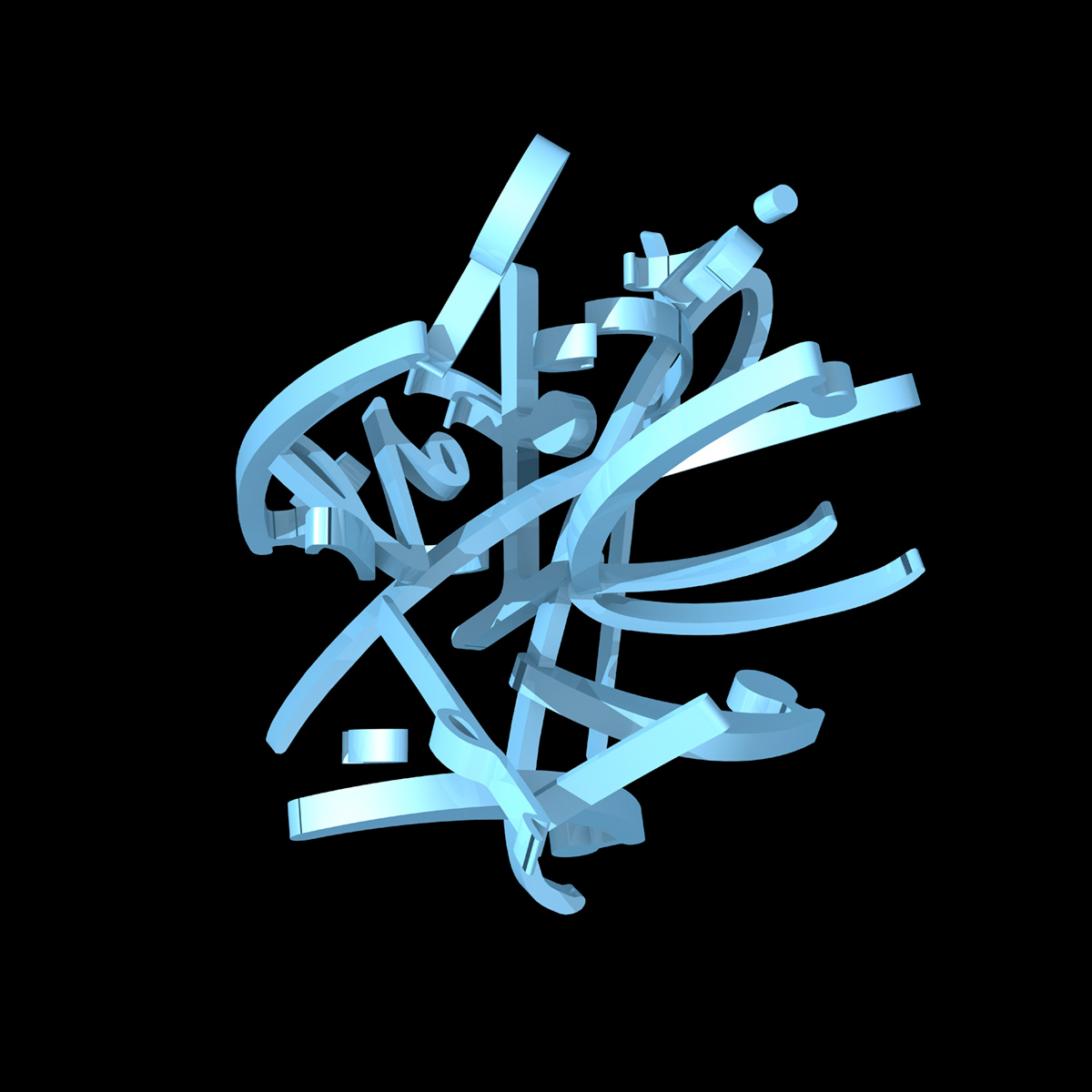
Visible Speech is an on-going project that utilizes the obsolete script of phonographic shorthand to create non-linear knots or entanglements from written language. The language objects reference the history of writing machines and technologies that were fundamental to the apparatus of bureaucracies and institutions during the twentieth century.

Hannah Arendt used a German form of cursive shorthand known as Sütterlin script when writing. Sütterlin was derived from an earlier form of blackletter cursive writing known as Kurrent. The Nazis banned all variations of blackletter writing in Germany.

All quotations by Hannah Arendt are from The Human Condition published in 1958.


Remote Sensing

The Remote Sensing landscapes are created from Landsat data used by the application Google Earth. Implemented in 1972, the Landsat program is an original source for public, non-military access to satellite imagery of the Earth. The Landsat archive is fundamental to research on climate change.

The Remote Sensing images represent the point when the satellite algorithm that interprets vantage point fails to render a location based on human perception and is forced to interpolate the data into fictitious landscapes.


Availability & Pricing

Please contact the gallery for more information, including current availability and pricing.

Request Info

Nancy Friedland

Nancy Friedland
Constellations

January 7 – 30, 2016
Circuit Gallery @ Prefix ICA
401 Richmond Street West, Suite 124
Toronto, ON, M5V 3A8

Artist’s Reception: Friday, January 8, 6-9 PM
Gallery Hours: Tuesday – Saturday, 11 AM – 5 PM


The stars we are given. The constellations we make. That is to say, stars exist in the cosmos, but constellations are the imaginary lines we draw between them, the readings we give the sky, the stories we tell.

— Rebecca Solnit, Storming the Gates of Paradise: Landscapes for Politics

Circuit Gallery is pleased to present a solo exhibition of new photographic work by Toronto-based artist Nancy Friedland.

The series of images that make up Friedland’s Constellations have the feeling of snapshot photography. The subject matter is the artist’s own family and domestic life. It feels personal and intimate.

The work is deceptively straightforward, capturing simple quotidian moments, focusing on small details and incidental things rather than the big events in an unfolding family narrative. In this way, Friedland’s work is less about documenting what has happened as ‘life event’, or something specific about the person portrayed, than it is about trying to arrest the flow of life, so as to find order in, and make meaning from it.

Friedland writes of the work: “I want to draw attention to this primitive seeking: the innate desire to find order, pattern and connection from a montage made up of these little moments. I am watching my characters closely as they age and change. If I illuminate certain details, will I find some truth, an underlying structure, a map that will give me the story I crave? Or are the visual patterns just that: here a line flows through many images, a colour that continues from frame to frame, forcing a connection where maybe there is none?”

Operating on multiple levels the exhibition offers a grammar of sorts, in which poetic connections and meanings are made as much from visual and formal relationships—colours, light, patterns—as from personal ones, the content, or implied narratives.

At the core of Constellations lie questions of relevance and legibility. It asks whether such photography can go beyond holding only highly subjective meaning and value. It evokes a consideration of photography as a medium at the heart of which lies a feeling of loss—”a presence that is already an absence, a taunting reminder of the passage of time and inevitability of death” (Catherine Zuromskis, Snapshot Photography: The Lives of Images).

Constellations is as much about our need to ‘tell stories’, and about the work, status, and indeed place of this kind of photography in the telling, as it is about the artist’s own personal experience of motherhood and family life.

Nancy Friedland: Constellations runs January 7 through February 1 at Circuit Gallery @ Prefix ICA, with a reception for the artist on Friday, January 8, from 6 – 9 PM.


Artist Bio

Nancy Friedland is a photo-based artist investigating narrative, nature, landscape, and loss in her work. After studying photography at the Ontario College of Art and Design, she completed her MFA at the Rochester Institute of Technology as a Sir Edmund Walker Scholar. She has received grants from the Ontario Arts Council and the Canada Council for the Arts. Her work has been shown in public and private institutions across Canada, the US, and in Japan. She lives and works in Toronto, and is represented by Circuit Gallery.

Artist Page: Nancy Friedland


Works Exhibited


Artist Statement


On a dark night, if I turn out all the lights, I can see the stars from my kitchen window. I know, of course, they are just little bits of light sent from long ago finally hitting my eyes at the same time—a science fact that never ceases to amaze me—but I want them to be more than that. So in that moment, as I look out from my warm, quiet perch in the kitchen, their light becomes part of the ancient map I see behind my eyes. They take up a spot in my brain and are assigned meaning, before I get a chance to remember what they really are. They root me: locating me in my world, in time and space.

We chart all the stars now, making them explain our ideas about science and math and forever, but once upon a time we turned them into constellations shaped like hunting dogs and herdsmen, used them to remember when to plant our seeds or reap the harvest. The stars can tell stories that comfort us while we wait for the world to stop spinning.

We look for and find meaning given only fragments of information. A gesture, a sign, the arrival of a bird is a message from the dead. We see Jesus in a piece of toast. We fall in love with someone because he looks like someone else. Stardust. Our brains make these leaps of logic all the time. We extrapolate. We fill in the blanks. We can’t help it.

I want to draw attention to this primitive seeking: the innate desire to find order, pattern and connection from a montage made up of these little moments. I am watching my characters closely as they age and change. If I illuminate certain details, will I find some truth, an underlying structure, a map, that will give me the story I crave? Or are the visual patterns just that: here a line flows through many images, a colour that continues from frame to frame, forcing a connection where maybe there is none?


Availability & Pricing

Current prices range from $300 – $3,000 depending on size, and increase as the edition sells.
Please contact the gallery for more information, including current availability and pricing.

Request Info

Naomi Harris

Naomi Harris
EUSA

August 27 – September 19, 2015
Circuit Gallery @ Prefix ICA
401 Richmond Street West, Suite 124
Toronto, ON, M5V 3A8

Artist’s Reception: Friday, September 11, 6-9 PM
Gallery Hours: Tuesday – Saturday, 11 AM – 5 PM


Circuit Gallery is pleased to present an exhibition of photographs by Naomi Harris from her new project EUSA, which documents American-themed places in Europe and European-themed places in America.

Since 2008 Harris has travelled across Europe and the United States visiting themed-towns, amusement parks, and festivals, photographing the ways in which popularly received ideas about one culture get expressed in the other.

Her work reflects a trade in signs. An important premise for most of these sites is tourism, where the deliberate manufacturing and consumption of ethnicity and cultural heritage play out through the symbolic markers of food, costume, architecture, and performance. 


The places represented run the gamut of who is doing this cultural manufacturing, for whom, and why. In “Olde-World” towns like Solvang, California; New Glarus, Wisconsin; or Orange City, Iowa the respective Danish, Swiss, or Dutch heritage being celebrated is ostensibly that of a significant segment of the local population and reflects a desire for authenticity. In other places the “heritage” is blatantly designed and marketed purely for its entertainment and escapist value. This is the case with many of the Western theme-parks visited in Europe, but also in such places as Busch Gardens or Las Vegas in the United States.

In many cases it is hard, at first, to locate where and when these pictures were taken: are we in the U.S, or somewhere in Europe? Upon closer examination, something inevitably reveals itself as out of place, and we realize our “mistake”. In other images it is much more obvious that what we are looking at is constructed and artificial – from benign pastiche to the more insidious and offensive forms of cultural appropriation.

Harris has a sharp eye for these relationships and for capturing the often funny, ridiculous and cute, but also the awkward and uncomfortable details that serve to heighten our perception of the subject at hand. The accumulated images offer a barrage and mash-up of stereotypes, signs and symbols. Places, traditions, cultures and histories become confused, condensed, and conflated. We often do not quite know what we are looking at, but the cumulative effect is as engaging and rewarding as it is challenging.

EUSA is an ambitious project that invites all sorts of interesting and important questions about authenticity, cultural identity, and appropriation, about the function of, and need fulfilled by, these “other-directed” places and their enduring appeal.

The exhibition is curated by Claire Sykes.

Naomi Harris: EUSA runs August 27 through September 19 at Circuit Gallery @ Prefix ICA, with a reception for the artist on Friday, September 11, from 6 – 9 PM.


Artist Bio

Naomi Harris is a Canadian photographer primarily working in portraiture who seeks to document interesting cultural trends through her subjects. Her personal projects include Haddon Hall, America Swings (published as a monograph by Taschen, 2008), EUSA, and the on-going Oh Canada. She has exhibited internationally and has received numerous awards and recognitions, most recently a New York Foundation for the Arts (NYFA) Fellowship in Photography, and a Long-Term Career Advancement Grant from the Canada Council for the Arts. She currently divides her time between Toronto and Los Angeles.

Artist Page: Naomi Harris


Curriculum Vitae (CV)

DOWNLOAD

Naomi Harris CV [PDF]


Works Exhibited


See additional here


Availability & Pricing

Please contact the gallery for more information, including current availability and pricing.

Request Info

Apprehensions

Apprehensions

Eamon Mac Mahon, Jon Wyatt, Chris Bennett

November 26 – December 19, 2015
Circuit Gallery @ Prefix ICA
401 Richmond Street West, Suite 124
Toronto, ON, M5V 3A8

Opening Reception: Thursday, November 26, 6-9 p.m.


Circuit Gallery presents Apprehensions, an exhibition featuring new photographic work by Eamon Mac Mahon (Canada), Jon Wyatt (UK), and Chris Bennett (USA).

This exhibition brings together three artists who, in this time of increasing ecological crisis, are deeply engaged with landscape, and who ask us through these works to consider our place in, and relationship to, the wider natural world.

The Enlightenment concept of ‘man’ as an autonomous, self-conscious, and rational subject hinges on the separation of an ‘outside’ natural world from an ‘inner’ human and subjective one. With this separation in place, nature became seen as something external to discover, appreciate, and study. The ensuing modernist project mutated this view of the natural world into something for us to exploit, master and control for our own ends, in the name of progress, science, and reason. Paradoxically, nature has simultaneously been seen as so vast and resilient that it was safe from our depredations. Both of these ideas have failed us.

Apprehensions engages landscape both as a subject for photography and as a genre, where the traditional aesthetic categories of the beautiful and sublime, often synonymous with the landscape tradition in art, take on new resonances in our contemporary apprehending of, and affective orientation towards, the natural world.

This exhibition situates the work of these three photographers, and their different approaches to this genre, as having been predicated on and motivated by a profound and heightened awareness of our species’ contributing role in global warming and our unfolding catastrophe.

Landscape has always been an important genre and subject for photography. And it makes more sense now than ever that artists are reengaging traditional aesthetic categories and feel compelled to reevaluate our culture’s changed and increasingly fraught relationship with nature and to question our assumed place in the world.

Such art can open up the world and our relationship to it. It can destabilize and move us, reminding us that there are other ways of being in it.

The exhibition is curated by Claire Sykes with an essay by Leo Hsu.


Bios

Eamon Mac Mahon is an artist working with photography and video based in Toronto. Raised in northern Alberta, his fascination with the wilderness began at an early age. Mac Mahon’s photographs have been published by the Walrus, National Geographic, Capricious, MIT Press and the New Yorker. His work has been exhibited at the Art Gallery of Ontario, Detroit Institute of Arts and the Power Plant. He is represented by Circuit Gallery (Toronto).

British photographer Jon Wyatt’s work documents the detachment of modern culture from our physical landscapes, both in the context of landscape iconography, national identity, human ecology and ecosystem transition; and through the perspective of vast spans of time and geologic processes. His work has been published in PDN, National Geographic Traveler, Orion Magazine and The Times amongst others and exhibited in Europe, South East Asia, the United States, and Canada.

Chris Bennett is an American photographer based in Portland, Oregon. He received his BFA from Indiana University in 1999 and his MFA in Photography, from the Hartford Art School, University of Hartford, in 2014. Bennett’s work has been shown widely, with exhibitions in Portland at Froelick Gallery, Camerawork Gallery, and the Oregon Historical Society; as well as nationally and internationally at The Phoenix Art Museum (AZ), Center for Contemporary Art (Santa Fe, NM), INOVA – Institute of Visual Arts (Milwaukee, WI), Camera Club of New York (New York, NY), and Kominek Gallery (Berlin, Germany).

Leo Hsu is a writer, researcher and photographer based in Toronto. He is a regular contributor to Fraction Magazine and holds a PhD in Anthropology and Certificate in Culture and Media from New York University. He has taught on the history of photography and documentary photography at Carnegie Mellon University and collaborated with the Silver Eye Center for Photography on several exhibitions, most recently A World Imagined: Kelli Connell and Sara Macel.


Works Exhibited


Eamon Mac Mahon


Jon Wyatt


Artist Statement – Fault Line


Chris Bennett


Artist Statement – Darkwood

Akihiko Miyoshi

Akihiko Miyoshi
CMYKRGB

April 9 – May 2, 2015
Circuit Gallery @ Prefix ICA
401 Richmond Street West, Suite 124
Toronto, ON, M5V 3A8

Reception: Wednesday, April 8, 6-9 PM
Gallery Hours: Tuesday – Saturday, 11 AM – 5 PM


Circuit Gallery is pleased to present CMYKRGB, an exhibition of new abstract photographic and installation work by Portland Oregon based artist Akihiko Miyoshi.

In this latest work, Miyoshi pushes his interest in the intersection of art and technology into new territory. While Miyoshi has consistently engaged questions specific to photographic representation – exploiting the conventions of perception, questioning the status of both the photographer/author and the referent/real in the digital age – here he extends his investigation into the very processes and conditions of contemporary image production.

“I believe we live in a moment where the torrent of the digital and the inertia of the analog collide with each other creating an aesthetic and lived experience unique to our time…. This collision is the subject of the works presented.”

The works exhibited exist, conceptually, somewhere between painting and photography. Visually, they are between formal abstraction and photographic representation.

Using photography, a medium whose indexicality clings to the real, Miyoshi performs a variety of gestures that bring to the fore the tensions between the analog and the digital. These gestures range from very material and mechanical performative actions undertaken in the studio in front of the camera (using paper, paint, light, mirrors, and the artists own body), to manipulations within the software (digital gestures such as offsetting the color channel), through to collaborations with the digital algorithms of the software – “letting it think” and act.

Miyoshi seeks to represent something of our contemporary experience of what is pervasive yet elusive, known only through the effects of optics, algorithms, data, and mediation – and experienced through screens and web browsers, 8-bit aesthetics, and virtual worlds.

The works evoke what is intangible or unrepresentable, and yet oddly familiar, by revealing something of the processes underneath the act of representation. Questioning and revealing the spaces between pigment and light, the tensions between the material and immaterial, the real and the virtual, between human and machine, between certainty and uncertainty, Miyoshi’s new work allegorically offers a way to look at the complexity of our present state.

The exhibition is accompanied by the essay, “Photography and the ‘Artifacts of Software’: Akihiko Miyoshi’s CMYKRGB,” by Toronto-based writer and researcher Emily Doucet.

Akihiko Miyoshi: CMYKRGB runs April 9 through May 2 at Circuit Gallery @ Prefix ICA, with an opening reception on Wednesday, April 8, from 6 – 9 PM.


Artist Bio

Born in Japan, Akihiko Miyoshi received his MFA in photography in 2005 from the Rochester Institute of Technology after leaving a PhD program in Electrical and Computer Engineering at Carnegie Mellon University to pursue art. Miyoshi is currently an Associate Professor of photography and digital media at Reed College in Portland, Oregon.

Miyoshi’s work explores the intersection between art and technology most frequently dealing with issues surrounding representation. His exhibition record includes shows in Portland, New York, Los Angeles, Rochester, Pittsburgh, and Toronto. He was named the International Award Winner of Fellowship 12 at The Silver Eye Center for Photography in Pittsburgh PA, and the finalist for the Betty Bowen Award from the Seattle Art Museum in 2012 and Aperture Portfolio Prize in 2013. Miyoshi received a Hallie Ford Fellowship in 2012. He is represented by Circuit Gallery, Toronto.

Artist page: Akihiko Miyoshi


Curriculum Vitae (CV)

DOWNLOAD

Akihiko Miyoshi CV [PDF]


Works Exhibited


Donald Weber

Donald Weber
Interrogations

November 27 – December 20, 2014
Circuit Gallery @ Prefix ICA
401 Richmond Street West, Suite 124
Toronto, ON, M5V 3A8

Reception: Thursday, November 27, 6-9 p.m.


Circuit Gallery is pleased to present an exhibition of work by Donald Weber, from his award-winning project Interrogations, seen here for the first time in Canada.

The exhibition features twelve large-format photographs of suspected criminals being subjected to intense interrogation in an unnamed police station somewhere in Ukraine. This powerful series is accompanied by a selection of smaller photographs, which serve as a prologue.

Weber spent seven years traveling throughout Ukraine and Russia in an effort to understand and show something of life in the post-Soviet era. He observed how, since the collapse of Communism and its replacement with free-market Capitalism and an ostensible democracy, people are negotiating their places between ideologies, past and promised, and within “the system”.

Over the course of his research Weber became increasingly preoccupied with the subject of Power as exercised by the modern state, and how it deploys an all-encompassing theatre for its subjects. Amassed, his gritty photographs offer a complex portrait of people and a place, haunted by the past, and disillusioned with the present and its failure to provide a promised future.

Interrogations is the culmination of this seven-year project and a sharp distillation of subject and theme—one that seeks to go beyond the specificity of time, place, and individual, to reveal something more universal about the human situation.

Power is invisible, an abstract concept to which we are all subject. It can only be represented through its effects and consequences, its symbols and subjects (victims and perpetrators). Weber’s photographs from inside the interrogation room are simple stark images offering complex scenes.

Having gained the trust and permission of both the policeman and detainees to take photographs, Weber, as third party witness to the unfolding dramas (including the violent threats, aggression, and intimidation tactics of the policeman) focused his lens on the suspects, the men and women (and youth) who for whatever reason are brought in for questioning and find themselves in the room, subjected to interrogation.

Weber withholds context and specificity. We are not given information as to who they are, or the what, where, or why of their circumstance. Reduced to the confines of the room and to a succinct grammar of gesture and expression, Weber adeptly offers a series of types revealing a range of emotion and reaction: angry, defiant, pleading, ashamed, terrified, scheming, pliant, resigned.

We are unable to adjudicate guilt or innocence here. The implied indictment, it would seem, is not of the people portrayed nor is it limited to former Soviet states, but rather of the very idea of “the system” and the larger abuse of power and authority. The interrogator, rarely seen in the photographs, becomes the embodiment of Power itself in these emblematic dramas played out on the small stage, within the confines of the room.

This is a work which intelligently asks and invites all sorts of interesting and important questions about photography and the photographic situation as much as it does about the interrogations themselves.

The exhibition is curated by Claire Sykes with a catalogue essay by Randy Innes.


Artist Bio

Donald Weber is a photographer fascinated by the subject of power (be it economic, political, or psychological) and how it deploys an all-encompassing theatre for its subjects.

His Interrogations project and accompanying book (Schilt, 2011) has received notable recognition and accolades from World Press Photo, PDN, Aperture, and many others. It was preceded by Bastard Eden, Our Chernobyl (2008) which won the Photolucida Book Award.

Weber’s numerous awards include a Guggenheim Fellowship, the Duke and Duchess of York Photography Prize, and two World Press Photo prizes. Most recently he was shortlisted for the 2014 Scotiabank Photography Award. He is a member of the acclaimed VII Photo agency.

Artist page: Donald Weber


Curriculum Vitae (CV)

DOWNLOAD

Donald Weber CV [PDF]


Works Exhibited


Prologue


Interrogations

Shelagh Keeley

Shelagh Keeley
Barcelona Pavilion

January 8 – 31st, 2015
Circuit Gallery @ Prefix ICA
401 Richmond Street West, Suite 124
Toronto, ON, M5V 3A8

Reception: Thursday, January 8, 6-9 p.m.


Circuit Gallery presents an exhibition of photographs by senior Canadian artist Shelagh Keeley. These images were taken in 1986 in the newly reconstructed Mies van der Rohe Pavilion in Barcelona, Spain, just before it was reopened to the public.

Keeley is well known for her highly visceral and embodied drawing practice. She has always used photography, incorporating it into her site-specific installation work and drawings through collage, however Keeley’s own photographs are rarely the focus of attention in an exhibition.

Barcelona Pavilion, presented here for the first time, reveals an approach to photography that is consistent with this artist’s broader practice. Here is a subjective and embodied kind of ‘drawing with light’ and poetic engagement with space that is refreshingly irreverent, inconsistent with both our expectation of photography and for pictures of such an iconic work of modernist architecture.

Albeit attracted to the iconic aspects of the celebrated building—the materials (marble, glass, and metal), the key spaces, and light—they seem like asides, as her focus is more ambient and on the mundane. She uses photography in a subjective way, where her “less is more” compositions are less about describing these sober and rational spaces, than they are about a poetics of space, and about being in them.

The exhibition is curated by Claire Sykes, with catalogue essays by Joel Robinson and Mark Kingwell.

Shelagh Keeley: Barcelona Pavilion runs January 8 through the 31st at Circuit Gallery @ Prefix ICA, with an opening reception on Thursday, January 8, from 6 – 9 PM. The artist is in attendance.


Artist Bio

Shelagh Keeley (born Oakville, Ontario) lives now in Toronto after spending 23 years in New York City and Paris. She received her Honours BFA in Art History / Anthropology from York University, Toronto.

Keeley has an extensive international exhibition history over the last 30 years and has travelled across the globe. Keeley’s recent production includes a commission by the Power Plant, Toronto, to create two new installations for the venue’s large clerestory walls (2014/2015), and by MoMA, Library and Archives, NYC, for a new research project / performance with choreographer Lin Snelling (2014/2015).

In 2013 she created a major on-site commissioned wall drawing installation at Stadtisches Museum Abteiberg, Monchengladbach, Germany, for the exhibition In Order to Join (2013). This exhibition will travel to the Goethe-Institut / Chhatrapati Shivaji Maharaj Vastu Sangrahalaya (former Prince of Wales Museum), Mumbai, India (2015), and will include the Barcelona Pavilion photographs.

Keeley’s larger record includes exhibitions at: Devi Art Foundation, Gurgaon, India (2013); Ryerson Image Centre, Toronto (2013); Nuit Blanche, Paris (2012); McMaster Museum of Art / Robert McLaughlin Gallery, Oshawa (2010); Vancouver Art Gallery (2010); Caoyang Village Public Art Project, Shanghai (2009); National Gallery of Canada (2008, travelling exhibition), RAM Foundation, Rotterdam (2008); Museum of Contemporary Canadian Art, Toronto (2007); Nature Morte Gallery, New Delhi (2004); Printed Matter, NYC (1998), Indianapolis Museum of Art (1995); John Gibson Gallery, NYC (1994); Exit Art, NYC (1993); MOMA P.S.1 Museum, NY (1992); and DIA Art Foundation, NYC (1989).

Her work is in the collection of major international public institutions including: the Museum of Modern Art, NYC; the Walker Art Center, Minneapolis; the Van Abbemuseum, Eindhoven; the Stedelijk Museum, Amsterdam; the National Gallery of Canada, Ottawa; the Fonds National d’Art Contemporain Paris; the Vancouver Art Gallery, Vancouver; the Musées de la Ville de Paris, Paris; the Getty Museum, Santa Monica; the Harvard Art Museum, Boston; the Mattress Factory, Pittsburgh; the Yale University Art Gallery, CT; and the San Francisco Museum of Modern Art, CA.

Artist page: Shelagh Keeley


Curriculum Vitae (CV)

DOWNLOAD

Shelagh Keeley CV [PDF]


Works Exhibited


Embedded

Embedded

Donald Weber + Dima Gavrysh

April 10 – May 3, 2014
Circuit Gallery @ Prefix ICA
401 Richmond Street West, Suite 124
Toronto, ON, M5V 3A8

Reception: Thursday, April 10, 6-9 p.m.
Artist’s Talk + Discussion (moderated by Sara Matthews): Saturday, April 12 1:00 p.m. – 2:00 p.m.


Circuit Gallery presents Embedded, a two-person exhibition featuring work by Canadian photographer Donald Weber, from his new project War Sand, and Ukrainian born, U.S. based photographer Dima Gavrysh, from his award winning project Inshallah. The exhibition is curated by Claire Sykes with a catalogue essay by Sara Matthews.

As Canada’s troops leave Afghanistan and we prepare to mark the centenary of the First World War, Embedded offers a timely look at war and the extents to which we can experience it through photography.

In War Sand, Donald Weber looks closely at the beaches of the Normandy coast, the sites of the Allied invasion of German-occupied France in 1944. His work asks questions about history and geology, and about sacrifice, memory and time. In a departure from his previous powerful pictures of people, Weber offers a series of beautiful and moody land and seascapes. These are complemented by micrographic images of sand collected from those beaches that reveal the traces of war: embedded in the beaches there remain vast quantities of shrapnel and other war debris.

Dima Gavrysh was embedded as a photojournalist with the U.S. Army in Afghanistan in 2009 and 2011. In the course of his work he moved progressively away from the kind of direct reportage he was expected to provide, toward taking a different kind of picture with the project evolving into a personal catharsis for which this war became a background. His powerful series, Inshallah, offers us a more emotional and embodied impression of that experience—one that seeks to convey the pervasive unease, confusion and frustration he witnessed there.

Embedded runs April 10 through May 3 at Circuit Gallery @ Prefix ICA with an Opening Reception on Thursday, April 10, from 6:00 p.m. – 9:00 p.m. (artists in attendance) and an Artist’s Talk + Discussion (moderated by Sara Matthews) on Saturday, April 12, 1 to 2:00 p.m.


Artist Bios


Donald Weber

Donald Weber is a photographer fascinated by the subject of power (be it economic, political, or psychological) and how it deploys an all-encompassing theatre for its subjects.

His Interrogations project and accompanying book (Schilt, 2011) has received notable recognition and accolades from World Press Photo, PDN, Aperture, and many others. It was preceded by Bastard Eden, Our Chernobyl (2008) which won the Photolucida Book Award.

Weber’s numerous awards include a Guggenheim Fellowship, the Duke and Duchess of York Photography Prize, and two World Press Photo prizes. Most recently he was shortlisted for the 2014 Scotiabank Photography Award. He is a member of the acclaimed VII Photo agency.

Artist page: Donald Weber

Dima Gavrysh

Dima Gavrysh is an interdisciplinary artist currently based in Portland, Oregon. He received his MFA from the Rhode Island School of Design in 2012 after studying photography and motion picture imaging in Kyiv, Ukraine. Gavrysh has worked as a documentary photographer in 1998 – 2010 with major publications and news agencies such as Associated Press, Bloomberg News, and Agence France-Presse. He has also worked on multiple projects around the globe, including collaborations with Doctors Without Borders and the United Nations Population Fund, and numerous embeds with the US Army in Afghanistan. His work has appeared in a variety of international publications, including The New York Times, Stern, Paris Match, Time and was exhibited both, in the US and internationally.

Over the past four years Dima has been exploring the American war in Afghanistan through video installation, photography, appropriated imagery and data visualization.

His first book Inshallah was published by Kehrer Verlag (Germany) in 2015.

Artist page: Dima Gavrysh


Works Exhibited


Donald Weber: War Sand


Dima Gavrysh: Inshallah